
Description
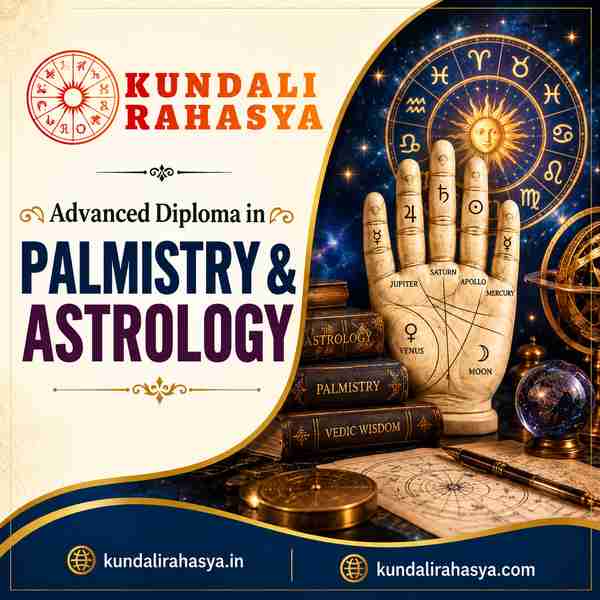
Course Name: Advanced Diploma in Palmistry & Astrology
The Advanced Diploma in Palmistry & Astrology introduces learners to two traditional systems used to explore symbolic interpretations of personality, life themes, and personal experiences. It examines hand features alongside foundational astrological concepts and the interpretive frameworks associated with each discipline.
Learners study hand shapes, major lines, mounts, fingers, planetary symbolism, zodiac signs, and basic birth-chart concepts. They practise organised observation and compare the two systems while keeping their methods distinct.
Palmistry and astrology are traditional interpretive practices, not scientifically established methods for diagnosing a person, guaranteeing outcomes, or predicting the future with certainty. Learners are encouraged to communicate responsibly and distinguish symbolic interpretations from verified facts.
Course Details
- Course Name: Advanced Diploma in Palmistry & Astrology
- Course Code: KR/AD/PA2536
- Course Level: Advanced Diploma
- Eligibility: 10th Pass or Equivalent
- Duration: 6 Months
- Learning Mode: Online / Self-Paced / Recorded Learning Resources
- Examination Mode: Online MCQ Examination
- Certificate Validity: Lifetime
- Certificate Verification: Online Verification Facility
About the Palmistry & Astrology Course
Palmistry and astrology have distinct traditions and methods. Palmistry focuses on visible hand features, including lines, mounts, fingers, and hand shape, while astrology studies celestial positions through a birth chart. This course introduces the terminology and traditional frameworks of both subjects.
Learners study hand observation, palm lines, mounts, finger proportions, zodiac signs, planets, houses, and introductory birth-chart interpretation. They practise separating direct observations from traditional meanings and recording information systematically.
The combined approach supports broader study while maintaining clear boundaries. Learners explore how the subjects may be compared without treating either as a substitute for evidence-based advice, professional services, or independent judgement.
Course Objective
The objective is to build understanding of palmistry and astrology, their core concepts, observation methods, and traditional interpretations while recognising the limitations of predictive claims. Learners will practise explaining concepts clearly and documenting observations.
Learners will study:
Hand shapes, fingers, mounts, and major palm lines.
Traditional meanings associated with heart, head, and life lines.
Palm markings and structured hand observation.
Basic planetary symbolism and zodiac signs.
The twelve astrological houses and their themes.
Introductory birth-chart terminology and placements.
Traditional interpretations of planets and signs.
Basic chart-reading steps and note-taking.
Differences between palmistry and astrology.
Ways to compare interpretations without overclaiming.
Ethical communication, consent, and confidentiality.
The distinction between symbolic traditions and scientific evidence.
Admission, Learning, Examination & Certification Process
Step 1: Course Enquiry — Learners review the course information and enquire about eligibility, learning resources, and enrolment.
Step 2: Registration — Applicants provide the requested details and complete applicable admission formalities.
Step 3: Learning Access — Enrolled learners receive access to available online and recorded learning resources.
Step 4: Self-Paced Study — Learners study modules in sequence, revise terminology, and maintain organised notes.
Step 5: Practice and Review — Learners practise identifying palm features and reviewing astrological concepts through examples.
Step 6: Revision — Learners consolidate key concepts and prepare for the prescribed online MCQ examination.
Step 7: Online Examination — Learners complete the examination according to the institute’s assessment instructions.
Step 8: Result Processing — Assessment results are handled through the institute’s applicable procedures.
Step 9: Certification — Eligible learners receive the course certificate, with online verification where provided.
Who Should Enroll in the Palmistry & Astrology Course?
This course may suit beginners interested in traditional palmistry and astrology, learners wishing to study both subjects in one programme, and enthusiasts exploring symbolic systems. It may also interest educators, content creators, and practitioners seeking broader familiarity with traditional terminology.
Learners should be willing to study carefully, organise observations, and communicate responsibly. Completing this course does not establish competence in regulated professional fields. Learners offering services should work within their training and avoid presenting traditional interpretations as guaranteed predictions or professional advice.
Core Learning Areas
1. Foundations of Palmistry
Introduces hand shapes, fingers, mounts, major lines, and traditional hand-reading terminology.
2. Major Lines and Hand Features
Explores commonly studied palm lines and visible features, emphasising accurate description before interpretation.
3. Foundations of Astrology
Introduces the zodiac, planets, signs, elements, modalities, and traditional astrological terminology.
4. Houses and Birth Charts
Explains the twelve houses, chart structure, planetary placements, and introductory chart-reading methods.
5. Integrated Traditional Study
Considers how practitioners compare palmistry and astrological interpretations while preserving the distinctions between the systems.
6. Observation and Documentation
Develops skills in recording observations and separating visible features from interpretive assumptions.
7. Applied Interpretation
Practises explaining traditional meanings using structured examples and balanced language.
8. Ethics and Responsible Communication
Focuses on privacy, consent, interpretive limitations, and avoiding fear-based claims.
Palmistry & Astrology Syllabus
Module 1: Introduction to Palmistry
Covers palmistry’s background, hand types, fingers, mounts, and identification of major palm lines.
Module 2: Palm Lines and Feature Analysis
Studies traditional descriptions of the heart line, head line, life line, and other commonly discussed markings.
Module 3: Introduction to Astrology
Introduces planets, zodiac signs, elements, modalities, and foundational astrological terminology.
Module 4: Houses and Birth Chart Basics
Explores the twelve houses, planetary placements, and the structure of a basic birth chart.
Module 5: Comparative and Integrated Interpretation
Practises reviewing examples from both disciplines and documenting traditional interpretations without treating them as proven outcomes.
Module 6: Ethics, Revision, and Assessment
Reviews privacy, responsible communication, interpretive limitations, and preparation for the online examination.
Palmistry & Astrology Assessment Framework
1. Core Terminology
Assesses knowledge of the main terms and traditional concepts used in both subjects.
2. Hand Feature Identification
Checks the ability to identify and describe hand shapes, fingers, mounts, and major palm lines.
3. Palm Line Understanding
Reviews knowledge of traditional descriptions associated with commonly studied palm lines and markings.
4. Planet and Sign Recognition
Assesses familiarity with planetary symbolism, zodiac signs, elements, and modalities.
5. House and Chart Concepts
Checks understanding of the twelve houses, chart structure, and basic planetary placements.
6. Observation Skills
Reviews whether learners can describe palm features and chart placements accurately before interpreting them.
7. Traditional Interpretation
Assesses understanding of symbolic meanings while recognising that interpretations vary by tradition.
8. Comparative Understanding
Checks whether learners can explain the differences between palmistry and astrology without confusing their methods.
9. Case Notes
Reviews clarity and consistency in written observations and interpretive notes.
10. Ethical Awareness
Assesses understanding of consent, confidentiality, respectful language, and the limits of predictive claims.
11. Applied Learning
Uses examples to assess the application of course terminology and balanced communication.
12. Online MCQ Examination
The prescribed online multiple-choice examination reviews key concepts and learning outcomes under the institute’s applicable procedures.
Certification Process
Learners who complete the applicable course requirements and meet the prescribed examination criteria may receive the Advanced Diploma in Palmistry & Astrology. The certificate is stated to have lifetime validity, with online verification where provided. Certification records completion of the educational programme; it does not scientifically validate palmistry or astrology or confer a regulated professional licence.
Career Opportunities
Learners may use the course as a foundation for further study, educational writing, introductory workshops, or content about traditional palmistry and astrology. Those familiar with one discipline may use the programme to broaden their understanding of the other.
Some learners may incorporate introductory readings into an existing traditional practice, provided they describe the service accurately and respect clients’ privacy and choices. They should avoid guarantees about health, wealth, marriage, employment, or other life outcomes and should not replace qualified professional advice with symbolic interpretations.
Other possibilities include preparing beginner resources and supporting educational discussions. Opportunities depend on skills, experience, demand, and local requirements. Completing the course does not guarantee employment, clients, income, or professional recognition.
Scope for Independent Palmistry & Astrology Practice
Learners may explore the following educational activities within their competence and applicable ethical boundaries:
Basic descriptions of hand shapes and palm features.
Introductory explanations of major palm lines.
Traditional classification of mounts and fingers.
Introduction to zodiac signs and planetary symbolism.
Basic explanations of the twelve astrological houses.
Familiarisation with birth-chart terminology.
Preparation of structured observation notes.
Comparison of traditional interpretations across examples.
Creation of introductory articles and study guides.
Development of beginner-level learning materials.
Support for introductory educational workshops.
Practice readings with clear consent and limitations.
Use of balanced, non-deterministic language.
Referral to qualified professionals when appropriate.
Continued study of traditional methods and ethical practice.
These activities should not be presented as scientific diagnosis, guaranteed prediction, or a substitute for qualified legal, medical, financial, or mental-health advice.
Expected Income & Earning Potential
Income from palmistry- or astrology-related work varies according to experience, service quality, location, demand, pricing, audience, and working arrangements. The figures below are illustrative possibilities, not verified salary benchmarks or guaranteed earnings.
Indicative ranges:
- Beginner: ₹1,80,000 – ₹4,00,000 per year
- Experienced: ₹4,00,000 – ₹8,00,000 per year
- Independent Practitioner: ₹6,00,000 – ₹12,00,000+ per year
- Established Practitioner: ₹9,00,000 – ₹16,00,000+ per year
Actual earnings may be lower or higher, and some learners may not earn income from these subjects. These figures are not promises or evidence-based forecasts. Outcomes depend on expenses, taxes, time invested, client acquisition, and applicable regulations.
Why Choose an Online Palmistry & Astrology Course?
Online study provides recorded resources that learners can revisit. A self-paced format may suit people balancing study with employment or other responsibilities.
A structured syllabus covers palmistry foundations, astrological terminology, chart concepts, comparative interpretation, and ethical communication. Studying the subjects together can support an organised understanding of their similarities and differences.
The online MCQ examination provides a defined assessment route. Before registering, learners should check enrolment details, learning access, examination requirements, and certificate-verification arrangements under the institute’s policies.
What is Palmistry & Astrology?
Palmistry studies visible hand features through traditional symbolic interpretations, while astrology interprets celestial positions through a birth chart. Neither should be treated as a scientifically proven method for predicting individual outcomes.
What is the duration of this course?
The stated course duration is six months. Learning is online, self-paced, and supported by recorded resources, subject to the institute’s arrangements.
What is the eligibility requirement?
The stated eligibility requirement is 10th Pass or Equivalent. Applicants should review the admission instructions for any additional formalities.
Do I need prior knowledge of either subject?
Prior knowledge may be helpful but is not necessarily required for introductory study. The course introduces foundational terms before structured interpretation.
How is the course assessed?
The stated examination mode is an online multiple-choice question examination. Learners should review the modules and follow the institute’s assessment instructions.
Will I receive a certificate?
Learners who meet the applicable learning and assessment requirements may receive the Advanced Diploma in Palmistry & Astrology certificate through the institute’s certification process.
Is the certificate valid for a lifetime?
The stated certificate validity is lifetime. Online verification is listed, subject to the institute’s certificate records and arrangements.
Can I study both subjects together?
Yes. The syllabus introduces palmistry and astrology in separate modules before comparative study, helping learners understand each subject’s terminology and traditional approach.
Can I offer readings after completing the course?
The course may provide a foundation for further learning or educational readings. Any service should remain within the learner’s competence, respect privacy, and avoid presenting interpretations as guaranteed outcomes or professional advice.
Does this course guarantee career or income opportunities?
No. Career outcomes and income depend on skills, experience, demand, and other circumstances. Completing the course does not guarantee employment, clients, or earnings.
