Kundali Rahasya – India’s Trusted App for Astrology Consultations
kundalirahasya108@gmail.com

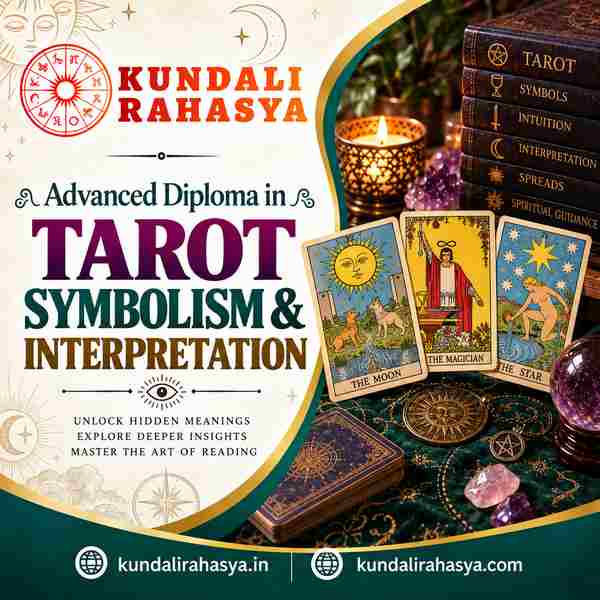
Advanced Diploma in Tarot Symbolism & Interpretation

Original price was: ₹11,500.Current price is: ₹5,750.

The course combines classical Tarot symbolism principles with advanced study of card imagery, archetypes and esoteric meanings, Major and Minor Arcana interpretation, elemental and astrological correspondences, colour and visual symbolism, upright and reversed meanings, symbolic combinations, intuitive interpretation techniques, spread-based analysis, predictive assessment, case-study research, report-writing and professional consultation practices. Learners can study through online resources and recorded lectures at their own pace.

Description

Course Name: Advanced Diploma in Tarot Symbolism & Interpretation

Develop a comprehensive understanding of the foundational and advanced principles of Tarot Symbolism and Interpretation for systematically studying Tarot cards, Major Arcana, Minor Arcana, four suits, court cards, numbers, colors, imagery, objects, figures, landscapes, elements, archetypal themes, visual symbolism, card meanings, intuitive interpretation, Tarot spreads, card combinations, reversed cards, contextual interpretation, relationship themes, career themes, financial themes, personal development, spiritual themes, timing considerations, practical readings, case studies, report preparation, and other essential Tarot interpretation factors with the Advanced Diploma in Tarot Symbolism & Interpretation. This advanced online program introduces learners to Tarot terminology, Tarot deck structure, Major Arcana, Minor Arcana, four suits, court cards, numerical symbolism, elemental symbolism, visual imagery, colors, objects, figures, landscapes, archetypes, symbolic patterns, Tarot spreads, card combinations, intuitive interpretation, reversed cards, Tarot timing, contextual reading, relationship themes, career themes, financial themes, personal development, case studies, report preparation, and responsible application of belief-based Tarot observations.

Course Details

Course Name: Advanced Diploma in Tarot Symbolism & Interpretation
Course Code: TSI/ADE/A26
Course Level: Advanced Diploma
Eligibility: 12th Pass or Equivalent
Duration: 6 Months
Learning Mode: Online / Self-Paced / Recorded Lectures
Examination Mode: Online MCQ Examination
Certificate Validity: Lifetime
Certificate Verification: Online Verification Facility

About the Course

Tarot is traditionally associated with symbolic interpretation, visual imagery, archetypal themes, intuitive observation, card combinations, and the exploration of personal and situational themes. The Advanced Diploma in Tarot Symbolism & Interpretation is designed to provide learners with a structured foundation in advanced concepts required to understand and study traditional Tarot symbolism and interpretive principles.

The program introduces learners to the essential framework of Tarot and explains the traditional significance of the Major Arcana, Minor Arcana, four suits, court cards, numbers, colors, objects, figures, landscapes, elements, archetypal imagery, visual patterns, card symbolism, Tarot spreads, card positions, and contextual interpretation.

Learners explore traditional Tarot principles and understand how symbolic conditions may be studied through imagery, colors, numbers, elements, objects, characters, landscapes, gestures, expressions, directions, backgrounds, suit associations, card combinations, spread positions, surrounding cards, question context, and intuitive observations. The program also introduces traditional considerations involving reversed cards, Tarot timing, recurring symbols, contrasting imagery, symbolic relationships, elemental associations, numerical patterns, visual emphasis, archetypal themes, and other interpretive factors.

The program covers foundational and advanced Tarot considerations related to Major Arcana, Minor Arcana, Wands, Cups, Swords, Pentacles, court cards, numbers, colors, elements, objects, figures, landscapes, archetypes, visual composition, relationship readings, career readings, financial themes, personal development, spiritual themes, decision-making, Tarot spreads, card combinations, reversed cards, timing, consultation structure, case studies, report preparation, and other themes traditionally examined through Tarot interpretation. Learners are introduced to traditional approaches for studying possible symbolic influences through Tarot imagery, numbers, elements, suits, positions, combinations, and contextual information.

Through practical examples and advanced exercises, learners can develop familiarity with identifying Tarot symbols, understanding Major and Minor Arcana imagery, studying numerical symbolism, observing colors and visual elements, interpreting objects and figures, analyzing landscapes and backgrounds, studying elemental symbolism, comparing recurring visual patterns, working with Tarot spreads, identifying card combinations, interpreting reversed cards, studying relationship and career themes, organizing symbolic observations, and preparing basic Tarot reports. The program also introduces traditional timing concepts, case-based analysis, consultation structure, report preparation, and responsible communication of belief-based observations.

Course Objectives

After completing this program, learners should have a better understanding of:

Foundations and principles of Tarot Symbolism & Interpretation
Advanced Tarot fundamentals
Meaning and traditional significance of Tarot symbolism
Basic Tarot terminology
Tarot deck fundamentals
Major Arcana fundamentals
Minor Arcana fundamentals
Wands suit fundamentals
Cups suit fundamentals
Swords suit fundamentals
Pentacles suit fundamentals
Court card fundamentals
Tarot symbolism fundamentals
Visual symbolism fundamentals
Numerical symbolism fundamentals
Color symbolism fundamentals
Elemental symbolism fundamentals
Object symbolism fundamentals
Figure and character symbolism fundamentals
Landscape symbolism fundamentals
Archetypal symbolism fundamentals
Tarot imagery fundamentals
Tarot intuition fundamentals
Tarot spread fundamentals
Tarot card position fundamentals
Tarot card combination fundamentals
Reversed card fundamentals
Tarot timing fundamentals
Major Arcana symbolism fundamentals
Minor Arcana symbolism fundamentals
Wands symbolism fundamentals
Cups symbolism fundamentals
Swords symbolism fundamentals
Pentacles symbolism fundamentals
Court card symbolism fundamentals
Symbolic pattern fundamentals
Recurring symbol fundamentals
Contrasting symbolism fundamentals
Visual composition fundamentals
Background symbolism fundamentals
Gesture and expression symbolism fundamentals
Direction and movement symbolism fundamentals
Number and suit relationship fundamentals
Element and suit relationship fundamentals
Symbol and context relationship fundamentals
Card meaning fundamentals
Contextual interpretation fundamentals
Relationship reading fundamentals
Career interpretation fundamentals
Financial interpretation fundamentals
Personal development reading fundamentals
Spiritual theme interpretation fundamentals
Tarot spread interpretation fundamentals
Tarot card combination analysis fundamentals
Reversed card interpretation fundamentals
Tarot timing interpretation fundamentals
Symbolic observation fundamentals
Intuitive symbolism fundamentals
Tarot narrative interpretation fundamentals
Practical Tarot reading principles
Basic Tarot symbolism reading principles
Advanced Tarot observation and synthesis
Responsible communication of Tarot observations
Practical application of advanced Tarot Symbolism & Interpretation principles

Who Should Enroll?

This program may be suitable for:

Students who want to learn Tarot symbolism from foundational to advanced concepts
Beginners and intermediate learners interested in studying Tarot symbolism systematically
Tarot learners seeking a structured advanced foundation in symbolic interpretation
Individuals interested in understanding Tarot imagery, colors, numbers, objects, and archetypes
Learners interested in traditional symbolic and intuitive Tarot interpretation
Individuals exploring relationship, career, financial, spiritual, and personal development themes
Students planning to pursue advanced Tarot reading and consultation studies
Tarot enthusiasts interested in developing advanced observation and interpretation skills
Individuals interested in developing reading, case analysis, and report preparation skills

No advanced professional Tarot experience is required. Basic familiarity with Tarot cards, Major Arcana, Minor Arcana, suits, or traditional interpretive concepts may be helpful but is not mandatory.

Key Skills You Will Develop

Foundations of Tarot Symbolism & Interpretation

Develop a comprehensive understanding of Tarot cards, Major Arcana, Minor Arcana, four suits, court cards, visual imagery, numbers, colors, objects, figures, landscapes, elements, archetypes, symbolic patterns, Tarot spreads, card combinations, intuitive observation, contextual interpretation, and other principles used in traditional Tarot symbolism study.

Advanced Tarot Fundamentals

Learn the advanced framework of Tarot interpretation and understand how card meanings, symbolism, positions, combinations, spreads, and intuitive observations may traditionally be studied together.

Tarot Symbolism Terminology

Become familiar with commonly used terms relating to Major Arcana, Minor Arcana, suits, court cards, symbols, imagery, colors, numbers, elements, objects, figures, landscapes, archetypes, spreads, combinations, reversals, timing, readings, and traditional interpretive concepts.

Tarot Deck Fundamentals

Understand the traditional structure of a Tarot deck and study the relationship between Major Arcana, Minor Arcana, four suits, court cards, numbers, imagery, symbolism, and different reading approaches.

Major Arcana Fundamentals

Learn the traditional structure and significance of the Major Arcana and understand how its symbolic themes, imagery, archetypes, numbers, colors, objects, figures, and visual elements may be studied during Tarot interpretation.

Minor Arcana Fundamentals

Study the Minor Arcana and understand the traditional significance of suits, numbered cards, court cards, elements, situations, emotions, actions, thoughts, material themes, and visual symbolism.

Wands Suit Fundamentals

Understand traditional interpretations associated with Wands, including action, motivation, creativity, ambition, initiative, energy, movement, confidence, personal drive, and symbolic expressions appearing throughout the suit.

Cups Suit Fundamentals

Explore traditional interpretations associated with Cups, including emotions, relationships, intuition, feelings, connections, imagination, sensitivity, and emotional symbolism appearing throughout the suit.

Swords Suit Fundamentals

Study traditional interpretations associated with Swords, including thoughts, communication, decisions, conflict, reasoning, challenges, analysis, mental activity, and intellectual symbolism appearing throughout the suit.

Pentacles Suit Fundamentals

Understand traditional interpretations associated with Pentacles, including material matters, resources, work, finances, stability, practical concerns, security, physical circumstances, and material symbolism appearing throughout the suit.

Court Card Fundamentals

Learn traditional approaches to interpreting Pages, Knights, Queens, and Kings through personality, behavior, maturity, situations, roles, elemental characteristics, visual imagery, and symbolic qualities.

Tarot Symbolism Fundamentals

Explore traditional symbolism appearing throughout Tarot imagery, including colors, numbers, objects, figures, landscapes, animals, elements, expressions, gestures, actions, and visual relationships.

Visual Symbolism Fundamentals

Develop familiarity with observing the visual components of Tarot cards and understanding how traditional interpretations may consider imagery, composition, placement, objects, characters, backgrounds, and symbolic details.

Numerical Symbolism Fundamentals

Study traditional numerical symbolism within Tarot and understand how numbers may be considered alongside card meanings, sequences, suits, positions, and contextual interpretation.

Color Symbolism Fundamentals

Explore traditional approaches to studying colors appearing in Tarot imagery and understand how colors may contribute symbolic associations to the interpretation of a card.

Elemental Symbolism Fundamentals

Understand traditional elemental symbolism involving Fire, Water, Air, and Earth and study how elements may appear through suits, imagery, objects, characters, colors, and card themes.

Object Symbolism Fundamentals

Study traditional approaches to identifying objects represented within Tarot imagery and understanding how tools, clothing, vessels, weapons, plants, animals, structures, and other visual objects may contribute to symbolic interpretation.

Figure and Character Symbolism Fundamentals

Explore how human figures and characters may traditionally be studied through posture, clothing, facial expressions, gestures, actions, relationships, positioning, and archetypal qualities.

Landscape Symbolism Fundamentals

Understand how traditional Tarot interpretation may consider mountains, rivers, roads, buildings, fields, skies, water bodies, trees, vegetation, and other landscape elements appearing in card imagery.

Archetypal Symbolism Fundamentals

Study traditional archetypal themes represented through Tarot imagery and understand how recurring character types, situations, journeys, challenges, transformations, and symbolic patterns may be considered.

Tarot Imagery Fundamentals

Learn how the overall visual composition of a Tarot card may traditionally be observed, including figures, objects, colors, numbers, elements, landscapes, expressions, actions, and relationships between different visual components.

Tarot Intuition Fundamentals

Develop familiarity with traditional approaches to intuitive observation while understanding the importance of combining intuition with established card meanings, symbolic details, and structured interpretation.

Tarot Spread Fundamentals

Learn how Tarot spreads organize cards into specific positions and how each position may represent a different aspect of a question or situation.

Tarot Card Position Fundamentals

Understand how the position of a card within a spread may influence its traditional symbolic interpretation and how visual symbolism may be connected with the role assigned to that position.

Tarot Card Combination Fundamentals

Understand how multiple Tarot cards may traditionally be interpreted together rather than relying exclusively on isolated card meanings or individual symbols.

Reversed Card Fundamentals

Study traditional approaches to reversed Tarot cards and understand how reversal may be interpreted through blocked, internalized, delayed, weakened, hidden, or alternative expressions of card themes and symbolism.

Tarot Timing Fundamentals

Learn traditional approaches to studying timing symbolism through card meanings, numbers, suits, sequences, visual imagery, symbolic patterns, and contextual interpretation.

Major Arcana Symbolism Fundamentals

Develop the ability to study traditional Major Arcana symbolism through archetypes, numbers, colors, figures, objects, landscapes, elements, visual composition, and recurring themes.

Minor Arcana Symbolism Fundamentals

Explore the symbolic structure of the Minor Arcana and understand how suits, numbers, elements, imagery, situations, and visual patterns may traditionally contribute to interpretation.

Wands Symbolism Fundamentals

Study recurring symbols within Wands imagery and understand their traditional relationship with action, creativity, initiative, ambition, movement, confidence, energy, and personal drive.

Cups Symbolism Fundamentals

Explore recurring symbols within Cups imagery and understand their traditional relationship with emotions, relationships, intuition, feelings, imagination, receptivity, and emotional experiences.

Swords Symbolism Fundamentals

Study recurring symbols within Swords imagery and understand their traditional relationship with thoughts, communication, decisions, reasoning, conflict, challenges, analysis, and mental activity.

Pentacles Symbolism Fundamentals

Understand recurring symbols within Pentacles imagery and explore their traditional relationship with resources, work, finances, stability, practical matters, security, physical circumstances, and material themes.

Court Card Symbolism Fundamentals

Learn traditional approaches to studying the visual symbolism of Pages, Knights, Queens, and Kings through clothing, posture, objects, expressions, landscapes, gestures, suit associations, and personality characteristics.

Symbolic Pattern Fundamentals

Develop the ability to observe repeated symbolic themes, visual structures, numbers, colors, elements, objects, and archetypal patterns across different Tarot cards.

Recurring Symbol Fundamentals

Study how recurring objects, figures, colors, landscapes, animals, elements, and visual motifs may traditionally provide additional context during Tarot interpretation.

Contrasting Symbolism Fundamentals

Understand how contrasting imagery, opposing visual elements, different colors, directional movement, environmental differences, and symbolic opposites may traditionally be considered within Tarot interpretation.

Visual Composition Fundamentals

Explore the arrangement of figures, objects, backgrounds, colors, symbols, movement, and visual emphasis within a Tarot card and understand their possible traditional interpretive significance.

Background Symbolism Fundamentals

Study how skies, landscapes, buildings, water, mountains, vegetation, pathways, and other background elements may traditionally contribute to the symbolic context of a Tarot card.

Gesture and Expression Symbolism Fundamentals

Understand how traditional Tarot interpretation may consider posture, facial expression, hand gestures, body orientation, movement, stillness, and interactions between figures.

Direction and Movement Symbolism Fundamentals

Study traditional approaches to observing the direction in which figures, animals, objects, roads, rivers, or other visual elements appear to move and how this may contribute to symbolic interpretation.

Number and Suit Relationship Fundamentals

Learn how numbers and suit characteristics may traditionally be considered together to understand the symbolic expression of Minor Arcana cards.

Element and Suit Relationship Fundamentals

Understand how traditional elemental associations may interact with Wands, Cups, Swords, and Pentacles and influence symbolic interpretation.

Symbol and Context Relationship Fundamentals

Study how the meaning of a symbol may be considered alongside the card, spread position, surrounding cards, question, and broader reading context rather than being interpreted in isolation.

Card Meaning Fundamentals

Develop a structured understanding of traditional Tarot card meanings and learn how established meanings may be combined with visual symbolism and contextual observation.

Contextual Interpretation Fundamentals

Understand why the question, spread, card position, surrounding cards, imagery, symbols, and circumstances may influence how a Tarot card is traditionally interpreted.

Relationship Reading Fundamentals

Understand traditional Tarot approaches to relationships, emotions, communication, compatibility, intentions, expectations, challenges, interpersonal dynamics, and symbolic patterns.

Career Interpretation Fundamentals

Explore traditional Tarot considerations involving professional direction, work environments, opportunities, responsibilities, leadership, decisions, challenges, workplace dynamics, and career symbolism.

Financial Interpretation Fundamentals

Study traditional Tarot considerations involving resources, work, financial decisions, material circumstances, business themes, stability, practical priorities, and prosperity-related symbolism.

Personal Development Reading Fundamentals

Learn traditional approaches to using Tarot symbolism for reflective study of personality, behavior, choices, challenges, strengths, development, transformation, and personal patterns.

Spiritual Theme Interpretation Fundamentals

Explore traditional Tarot symbolism associated with reflection, inner development, spiritual themes, archetypal journeys, intuition, transformation, and personal meaning.

Tarot Spread Interpretation Fundamentals

Develop skills for studying symbols within different Tarot spreads and understanding how card positions, combinations, imagery, and question context may influence traditional interpretation.

Tarot Card Combination Analysis Fundamentals

Learn how symbols, meanings, imagery, numbers, elements, suits, and archetypal themes may be interpreted together when multiple Tarot cards appear in a reading.

Reversed Card Interpretation Fundamentals

Study traditional approaches to reversed cards and understand how visual symbolism, card meanings, hidden qualities, blocked expressions, delays, and alternative interpretations may be considered.

Tarot Timing Interpretation Fundamentals

Explore traditional timing approaches using numbers, suits, sequences, imagery, movement, symbolic patterns, and contextual interpretation.

Symbolic Observation Fundamentals

Develop a structured approach to observing visual details within Tarot cards before assigning interpretive meaning, including figures, objects, colors, numbers, landscapes, elements, and composition.

Intuitive Symbolism Fundamentals

Learn how intuitive impressions may traditionally be incorporated into symbolic Tarot interpretation while maintaining awareness of established card meanings and contextual factors.

Tarot Narrative Interpretation Fundamentals

Understand how individual symbols, card meanings, visual relationships, spread positions, and card combinations may traditionally be organized into a coherent symbolic narrative.

Practical Tarot Reading Principles

Develop the ability to identify symbols, understand traditional meanings, interpret positions, study combinations, select spreads, observe visual details, and organize basic Tarot observations before attempting advanced interpretation.

Basic Tarot Symbolism Reading Principles

Develop the ability to identify numbers, colors, elements, objects, figures, landscapes, archetypes, and visual patterns and organize these observations before attempting advanced symbolic interpretation.

Advanced Tarot Observation and Synthesis

Learn how cards, symbols, numbers, colors, elements, figures, objects, landscapes, archetypes, spreads, combinations, and contextual information may traditionally be considered together rather than relying on a single factor.

Responsible Communication of Tarot Observations

Understand how to communicate Tarot interpretations responsibly while recognizing their traditional and belief-based nature and avoiding guarantees of specific outcomes.

Practical Application of Advanced Tarot Symbolism & Interpretation Principles

Apply advanced foundational concepts through Tarot symbolism study, visual observation, card interpretation, relationship themes, career questions, financial themes, personal development, spiritual themes, card combinations, Tarot spreads, case studies, practical exercises, and structured report preparation.

Advanced Diploma in Tarot Symbolism & Interpretation Syllabus

Module 1: Foundations of Tarot Symbolism & Interpretation, Tarot Deck and Symbolic Structure

Introduction to Tarot terminology, Tarot deck structure, Major Arcana, Minor Arcana, four suits, court cards, numbers, colors, elements, objects, figures, landscapes, archetypes, visual composition, symbolic patterns, and the basic framework used for traditional Tarot symbolism and interpretation.

Module 2: Major and Minor Arcana Symbolism, Suits, Numbers, Colors and Elements

Detailed study of Major Arcana symbolism, Minor Arcana symbolism, Wands, Cups, Swords, Pentacles, numerical symbolism, color symbolism, elemental associations, court card imagery, recurring symbols, visual patterns, objects, figures, landscapes, and traditional approaches to analyzing symbolic characteristics within Tarot cards.

Module 3: Tarot Imagery, Visual Composition, Spreads, Combinations, Reversals and Interpretation

Study of Tarot imagery, figures, objects, colors, landscapes, gestures, expressions, direction, movement, card positions, Tarot spreads, card combinations, reversed cards, timing considerations, surrounding-card analysis, intuitive observation, contextual interpretation, and other foundational principles relevant to Tarot Symbolism & Interpretation.

Module 4: Tarot Symbolism for Relationships, Career, Finance, Spiritual and Personal Themes

Introduction to traditional Tarot considerations involving relationships, communication, emotions, compatibility, career, work environments, opportunities, responsibilities, finances, resources, personal development, spiritual themes, decision-making, transformation, and other life themes through symbolic and contextual interpretation.

Module 5: Advanced Tarot Symbolism, Assessment, Combinations, Timing and Responsible Interpretation

Introduction to advanced Tarot symbolism, visual analysis, recurring symbols, contrasting imagery, archetypal themes, numerical and elemental relationships, card combinations, spread positions, reversed symbolism, timing, contextual assessment, consultation boundaries, case analysis, report preparation, and responsible interpretation of Tarot observations.

Module 6: Practical Tarot Symbolism & Interpretation, Case Studies and Report Preparation

Practical application of advanced Tarot Symbolism & Interpretation through Major Arcana analysis, Minor Arcana study, suit symbolism, court card symbolism, numerical analysis, color observation, elemental symbolism, object and figure analysis, landscape interpretation, archetypal study, Tarot spread selection, card combination analysis, relationship and career readings, financial themes, personal development readings, symbolic case studies, practical reading exercises, Tarot report preparation, and responsible presentation of belief-based observations.

Admission, Learning, Examination and Certification Process

Step 1: Course Enrollment

Complete the online admission process for the Advanced Diploma in Tarot Symbolism & Interpretation and provide the required learner information.

Step 2: Learning Access

After enrollment, learners receive access to the online learning environment and available recorded course materials.

Step 3: Self-Paced Study

Study the program modules according to your preferred schedule. Learners can review recorded lectures and course material during the available learning period.

Step 4: Advanced Foundational Learning

Apply Tarot concepts through Major Arcana study, Minor Arcana analysis, four suit interpretation, court card study, numerical symbolism, color symbolism, elemental associations, visual imagery, objects, figures, landscapes, archetypes, symbolic patterns, Tarot spread selection, card combination interpretation, reversed card interpretation, timing considerations, relationship readings, career readings, financial themes, personal development, spiritual themes, contextual analysis, case studies, and practical Tarot exercises.

Step 5: Course Completion

Complete the prescribed learning material and prepare for the online assessment after studying the program modules.

Step 6: Online Examination

Appear for the online MCQ examination according to the applicable examination process.

Step 7: Evaluation

The submitted examination is evaluated according to the prescribed assessment criteria.

Step 8: Certificate Issuance

Eligible learners who successfully complete the program and assessment requirements receive the Advanced Diploma in Tarot Symbolism & Interpretation.

Step 9: Certificate Verification

The certificate can be checked through the available online certificate verification facility.

Certificate Delivery

Digital certificate may be provided through the applicable online delivery process.
Certificate details can be used for online verification where the verification facility is available.
Certificate validity is lifetime.
Learners should retain their certificate details for future verification or educational documentation.

Career Opportunities

The knowledge developed through this advanced program may support further learning and development in areas such as:

Tarot Symbolism Studies Learner
Advanced Tarot Student
Tarot Symbolism Student
Tarot Study Assistant
Tarot Research Assistant
Tarot Content Writer
Tarot Content Developer
Tarot Symbolism Analysis Trainee
Tarot Reading Trainee
Tarot Interpretation Trainee
Tarot Relationship Reading Trainee
Tarot Career Reading Trainee
Tarot Reading Practitioner
Tarot Symbolism Analysis Practitioner
Tarot Report Preparation Assistant
Tarot Education Assistant
Independent Tarot Symbolism Learner

The program is primarily designed to establish advanced foundational knowledge. Learners interested in professional Tarot reading, symbolic interpretation, or Tarot consultation may continue with specialized education, practical training, case-based experience, reading practice, consultation development, and advanced Tarot programs.

Scope for Independent Practice

Learners may explore foundational and advanced activities involving:

Basic Tarot study
Advanced Tarot study
Tarot deck study
Major Arcana study
Minor Arcana study
Wands suit study
Cups suit study
Swords suit study
Pentacles suit study
Court card study
Tarot symbolism study
Visual symbolism study
Numerical symbolism study
Color symbolism study
Elemental symbolism study
Object symbolism study
Figure and character symbolism study
Landscape symbolism study
Archetypal symbolism study
Tarot imagery study
Tarot intuition study
Tarot spread study
Tarot card position study
Tarot card combination study
Reversed card study
Tarot timing study
Major Arcana symbolism practice
Minor Arcana symbolism practice
Wands symbolism study
Cups symbolism study
Swords symbolism study
Pentacles symbolism study
Court card symbolism study
Symbolic pattern study
Recurring symbol study
Contrasting symbolism study
Visual composition study
Background symbolism study
Gesture and expression study
Direction and movement symbolism study
Number and suit relationship study
Element and suit relationship study
Symbol and context relationship study
Card meaning study
Contextual interpretation study
Relationship Tarot study
Career Tarot study
Financial Tarot study
Personal development Tarot study
Spiritual Tarot study
Tarot spread interpretation practice
Tarot card combination analysis practice
Reversed card interpretation practice
Tarot timing interpretation practice
Symbolic observation practice
Intuitive symbolism practice
Tarot narrative interpretation practice
Single-card symbolism practice
Three-card symbolism practice
Major Arcana visual analysis
Minor Arcana visual analysis
Court card visual analysis
Tarot case study practice
Tarot symbolism research
Tarot report preparation practice
Further professional Tarot education

The program provides educational knowledge and advanced foundational exposure to traditional Tarot principles, Tarot deck structure, Major Arcana, Minor Arcana, four suits, court cards, numerical symbolism, color symbolism, elemental symbolism, objects, figures, landscapes, archetypes, visual composition, recurring symbols, contrasting imagery, card meanings, Tarot spreads, card positions, card combinations, reversed cards, timing considerations, intuitive observation, contextual interpretation, relationship readings, career themes, financial themes, personal development, spiritual themes, case studies, consultation structure, report preparation, and practical Tarot Symbolism & Interpretation. Tarot interpretations are belief-based and should not be understood as scientifically proven guarantees of specific outcomes. Results or experiences may vary, and the program does not guarantee particular personal, financial, professional, career, social, relationship, health, business, educational, or other outcomes. Tarot-based guidance should not be used as a substitute for qualified financial, medical, psychological, legal, career, business, or other professional advice.

Frequently Asked Questions

What is the Advanced Diploma in Tarot Symbolism & Interpretation?

The Advanced Diploma in Tarot Symbolism & Interpretation is an advanced online program designed to introduce learners to essential and practical principles of traditional Tarot symbolism, including Major Arcana, Minor Arcana, four suits, court cards, numbers, colors, elements, objects, figures, landscapes, archetypes, visual imagery, symbolic patterns, Tarot spreads, card combinations, reversed cards, timing, contextual interpretation, relationship readings, career themes, financial themes, personal development, case studies, and practical Tarot study.

How long is the program?

The program duration is 6 months. Learners can study through the available online, self-paced, and recorded learning format.

Who can enroll in this program?

The basic eligibility requirement is 12th Pass or Equivalent. The program is suitable for learners who want to build systematic and advanced foundational knowledge of Tarot symbolism and interpretation.

Do I need previous Tarot knowledge?

No advanced professional Tarot experience is required. The program begins with foundational Tarot principles and gradually introduces learners to more detailed and practical symbolism and interpretation concepts.

Is this program available online?

Yes. The program follows an online learning format with self-paced study and recorded lectures.

What is Tarot symbolism?

Tarot symbolism refers to the traditional study of visual images, numbers, colors, objects, figures, elements, landscapes, archetypes, gestures, and other symbolic details appearing within Tarot cards and their relationship to traditional card interpretation.

Why is symbolism important in Tarot interpretation?

Symbolism provides traditional visual and contextual information that may be considered alongside established card meanings, spread positions, surrounding cards, and the question being explored.

Does the program cover the Major Arcana?

Yes. The program covers the Major Arcana and introduces traditional approaches to studying their imagery, numbers, colors, objects, figures, landscapes, archetypes, and symbolic themes.

Does the program cover the Minor Arcana?

Yes. The program covers the Minor Arcana and studies the traditional symbolism of Wands, Cups, Swords, Pentacles, numbered cards, court cards, elements, and visual imagery.

Does the program cover all four Tarot suits?

Yes. The program covers Wands, Cups, Swords, and Pentacles and explores their traditional symbolic characteristics and visual expressions.

Does the program cover court card symbolism?

Yes. The program introduces the symbolism of Pages, Knights, Queens, and Kings through imagery, clothing, posture, objects, expressions, landscapes, elemental associations, suit characteristics, and personality themes.

Does the program cover numerical symbolism?

Yes. The program introduces traditional numerical symbolism and explores how numbers may be considered alongside suits, card meanings, sequences, spread positions, and contextual interpretation.

Does the program cover color symbolism?

Yes. The program introduces traditional approaches to studying colors within Tarot imagery and their possible symbolic associations.

Does the program cover elemental symbolism?

Yes. The program covers traditional elemental symbolism involving Fire, Water, Air, and Earth and explores their relationship with suits, imagery, and card themes.

Does the program cover object symbolism?

Yes. Learners study traditional approaches to observing objects such as tools, vessels, weapons, clothing, plants, animals, structures, and other visual details within Tarot imagery.

Does the program cover figure and character symbolism?

Yes. The program introduces traditional approaches to studying figures through posture, expressions, gestures, clothing, actions, positioning, relationships, and archetypal qualities.

Does the program cover landscape symbolism?

Yes. The program introduces traditional approaches to studying mountains, rivers, roads, buildings, fields, skies, trees, vegetation, water bodies, and other landscape elements.

Does the program cover archetypal symbolism?

Yes. The program explores traditional archetypal themes involving character types, journeys, challenges, transformation, development, relationships, and recurring symbolic patterns.

Does the program cover Tarot imagery?

Yes. The program studies the visual composition of Tarot cards, including figures, objects, colors, numbers, elements, landscapes, gestures, expressions, actions, and relationships between visual components.

Does the program cover Tarot spreads?

Yes. The program introduces traditional Tarot spreads and explains how symbols and card meanings may be considered according to the position of each card within a layout.

Does the program cover card combinations?

Yes. The program introduces traditional approaches to interpreting multiple Tarot cards together and studying their combined meanings, symbols, visual relationships, and contextual themes.

Does the program cover reversed cards?

Yes. The program introduces traditional approaches to reversed cards and their possible symbolic interpretations, including blocked, hidden, delayed, internalized, weakened, or alternative expressions.

Does the program cover Tarot timing?

Yes. The program introduces traditional timing considerations involving numbers, suits, sequences, imagery, movement, symbolic patterns, and contextual interpretation.

Does the program cover recurring symbols?

Yes. The program introduces approaches for observing recurring objects, colors, figures, landscapes, numbers, elements, and visual motifs across different Tarot cards.

Does the program cover contrasting symbolism?

Yes. The program explores traditional approaches to observing contrasting imagery, visual opposites, colors, directions, movement, environmental differences, and symbolic contrasts.

Does the program cover visual composition?

Yes. The program studies how figures, objects, backgrounds, colors, symbols, movement, and visual emphasis may traditionally contribute to Tarot interpretation.

Does the program cover background symbolism?

Yes. Traditional approaches to interpreting skies, landscapes, buildings, pathways, vegetation, mountains, water, and other background details are included.

Does the program cover gesture and expression symbolism?

Yes. The program introduces traditional observation of posture, facial expressions, hand gestures, body orientation, movement, stillness, and interactions between figures.

Does the program cover relationship readings?

Yes. Traditional Tarot considerations involving emotions, communication, compatibility, intentions, expectations, challenges, interpersonal dynamics, and symbolic patterns are included.

Does the program cover career readings?

Yes. The program introduces traditional Tarot considerations involving professional direction, work environments, opportunities, responsibilities, leadership, decisions, challenges, and career themes.

Does the program cover financial themes?

Yes. Traditional Tarot considerations involving resources, work, financial decisions, material circumstances, business themes, stability, practical priorities, and prosperity-related symbolism are introduced.

Does the program cover personal development readings?

Yes. The program introduces traditional approaches to studying personality, behavior, choices, strengths, challenges, development, transformation, and personal patterns through Tarot symbolism.

Does the program cover spiritual themes?

Yes. Traditional symbolic considerations involving reflection, inner development, intuition, archetypal journeys, transformation, and spiritual themes are introduced.

Does the program teach contextual interpretation?

Yes. Learners are introduced to traditional approaches for considering the question, spread position, surrounding cards, imagery, symbols, card meanings, and broader circumstances together rather than interpreting individual symbols in isolation.

Does the program include practical Tarot symbolism examples?

Yes. The program includes visual observation exercises, card interpretation examples, Tarot spread activities, symbolism analysis, card combination exercises, relationship and career examples, case studies, and foundational practical exercises intended to help learners apply the concepts introduced in the modules.

Does the program teach symbolic observation?

Yes. The program develops a structured approach to observing visual details such as numbers, colors, objects, figures, landscapes, elements, gestures, expressions, movement, and composition before forming a traditional interpretation.

Does the program teach Tarot narrative interpretation?

Yes. The program introduces traditional approaches to organizing individual symbols, card meanings, visual relationships, spread positions, and combinations into a broader symbolic narrative.

Can I use the program for Tarot consultation preparation?

The program introduces symbolic interpretation, reading structure, contextual analysis, case studies, consultation considerations, and report preparation as foundational learning areas. Professional consultation generally requires additional practical training and experience.

Can I become a professional Tarot reader after completing this program?

The program provides advanced foundational knowledge and may serve as a starting point for further Tarot reading and consultation education. Professional practice generally requires additional specialized study, practical reading experience, case-based learning, and development of consultation skills.

Does the program guarantee success in Tarot practice?

No. Completion of the program does not guarantee professional success, income, clients, consultations, readings, or any specific personal or professional outcome.

Does Tarot symbolism guarantee a specific outcome?

No. Tarot is a traditional, belief-based practice, and symbolic interpretation does not scientifically guarantee specific events, results, financial outcomes, relationship outcomes, career outcomes, health outcomes, or future outcomes.

Can Tarot replace professional advice?

No. Tarot-based observations should not replace qualified financial, medical, psychological, legal, career, business, or other professional advice when such advice is required.

Is the diploma valid for a lifetime?

Yes. The stated certificate validity for the program is Lifetime.

Can the diploma be verified online?

Yes. An Online Verification Facility is available for certificate verification as applicable.

Can I study the program at my own pace?

Yes. The learning mode is Online / Self-Paced / Recorded Lectures, allowing learners to organize their study according to their available schedule.

Student Reviews

Student feedback for Advanced Diploma in Tarot Symbolism & Interpretation

5.0
5.0/5 Overall Rating
Based on 30 student reviews
K
Kavita Mishra
Course Student
The course was informative and easy to complete. I learned many useful concepts from the modules.
D
Deepak Tiwari
Course Student
A well-organized course with useful study material. It helped me improve my understanding of the subject.
R
Ritu Agarwal
Course Student
The course content was good and understandable. I am satisfied with the overall learning experience.
M
Manish Joshi
Course Student
I enjoyed studying this course. The concepts were explained in a way that was easy for me to understand.
S
Sneha Kapoor
Course Student
Good learning experience. The course gave me useful knowledge and helped me understand the subject better.
A
Arun Choudhary
Course Student
The course was useful and easy to access online. The study material was helpful for self-paced learning.
M
Meena Soni
Course Student
I found the course simple and informative. It was suitable for learning from home at my own convenience.
N
Nitin Saxena
Course Student
The course provided useful information and the learning process was straightforward.
S
Shweta Rai
Course Student
Good course for anyone interested in learning the subject. The modules were clear and easy to follow.
A
Ajay Malhotra
Course Student
I am happy with the course. The material was arranged properly and covered the important topics.
M
Monika Sharma
Course Student
The course was interesting and gave me a better understanding of the subject. I liked the self-paced format.
R
Rajesh Pawar
Course Student
A useful course with easy learning material. Overall I had a good experience.
D
Divya Bansal
Course Student
I liked the way the topics were divided into modules. It made learning much easier.
S
Suresh Verma
Course Student
The course was simple, clear and useful. I could understand the lessons without difficulty.
P
Payal Jain
Course Student
The course was good and suitable for online learners. I found the study material helpful.
A
Akash Gupta
Course Student
A good course for improving subject knowledge. I liked the convenience of online and self-paced study.
R
Rashmi Tiwari
Course Student
Very easy to understand and useful for beginners. I am satisfied with what I learned.
V
Vinod Kumar
Course Student
The course covered useful topics and the learning process was comfortable and flexible.
N
Nisha Patel
Course Student
I enjoyed completing this course. The lessons helped me build better knowledge of the subject.
G
Gaurav Singh
Course Student
The content was easy to follow and useful. I especially liked being able to learn according to my schedule.
K
Komal Mehta
Course Student
A very good learning experience. The course was informative, organized and easy to complete.
A
Amit Sharma
Course Student
The course was easy to understand and the lessons were explained in a simple way. I enjoyed learning through this course.
P
Priya Verma
Course Student
Very useful course for beginners. The study material helped me understand the important concepts clearly.
R
Rohit Kumar
Course Student
Good course and useful learning material. I was able to study comfortably at my own pace.
N
Neha Gupta
Course Student
I had a good learning experience. The course content was properly arranged and easy to follow.
S
Sanjay Patel
Course Student
The course helped me improve my knowledge. I especially liked the simple presentation of the topics.
P
Pooja Singh
Course Student
Overall a good course. The modules were useful and I could complete them according to my available time.
R
Rahul Jain
Course Student
The lessons were informative and beginner friendly. It was a positive learning experience for me.
A
Anjali Mehta
Course Student
I liked the course structure and the way every topic was presented step by step.
V
Vikas Yadav
Course Student
Useful course for gaining basic and practical knowledge. The online learning format was convenient.
0
    0
    Your Course for Enrollment
    Your cart is emptyReturn to Shop